😃 Subscribe for Post Emails:
Oct 6:
MCS & Story Development,
Writing Process & Planning,
Chapters & Openings
Pantsers Flail, Plotters Prevail: One Column with Three Keys to Unlock Your Plot
Sep 22:
MCS & Story Development,
Writing Process & Planning
Sketch Your Next Novel Our Way; Get Started in One Day
Sep 8:
MCS & Story Development,
Writing Process & Planning,
Feedback & Retelling
Good Spiraling: Conscientiously Add Ideation and Feedback to Write Better Novels
Aug 25:
MCS & Story Development,
Writing Process & Planning
Once Upon a Time? What Fairy Tales Teach Novelists About Memory and Writing
Aug 11:
Writing Process & Planning,
Chapters & Openings
Part 3: Mastering the 100,000-Word Novel Budget: Multivalue Paragraphs
Jul 28:
Writing Process & Planning,
Chapters & Openings
Part 2: Mastering the 100,000-Word Novel Budget: Satisfying Chapters
Jul 14:
MCS & Story Development,
Writing Process & Planning,
Chapters & Openings
Part 1: How to Master the 100,000-Word Novel Budget and Make Every Word Count
Jun 30:
Feedback & Retelling,
Writer Personas,
Mindset & Motivation
Isolation's Impact: Evidence that Authors Misjudge Their Work
Jun 16:
MCS & Story Development,
Chapters & Openings,
Feedback & Retelling
Unlocking Story Sense: The Differentiator Between Good and Great Authors
Jun 2:
Contests & Anthologies,
Publishing & Career
Creation vs. Generation: Drawing a Non-technical Red Line Between Human Authorship and AI
May 19:
Marketing & Promotion,
Publishing & Career
Author Bio: From Bore to Brand with an Irresistible Tidbit in 6 Steps
May 5:
Marketing & Promotion,
Publishing & Career
Five Steps to a better Novel Cover: The A.T.E. Roadmap
Apr 21:
Marketing & Promotion,
Publishing & Career
Writers as Solepreneurs: Why Finishing your Novel Opens the Best Door to a Rewarding Business
Apr 14:
Marketing & Promotion,
Publishing & Career
How Authors Can Succeed During Economic Downturns
Apr 8:
MCS & Story Development,
Writing Process & Planning,
Publishing & Career
Have Sales Chase You: Select Writing Projects with Passion and Potential
Mar 25:
Writing Process & Planning,
Chapters & Openings,
Feedback & Retelling
The Art of Orientation: Anchoring Your Reader at Every Chapter Break
Mar 11:
Feedback & Retelling,
Writer Personas,
Mindset & Motivation
How to Cultivate "Healthy Arrogance": Part 2: The Confidence You Need to Break Through as a Novelist
Feb 25:
Feedback & Retelling,
Writer Personas,
Mindset & Motivation
How to Cultivate "Healthy Arrogance": Part 1: What Not to Do
Feb 11:
MCS & Story Development,
Writing Process & Planning,
Feedback & Retelling
Stop Writing in a Straight Line: The Power of Nonlinear Novel Development
Jan 29:
Writing Process & Planning,
Feedback & Retelling
The Waiter Problem: Why Authors Need True Product Testing
Jan 15:
MCS & Story Development,
Writing Process & Planning,
Publishing & Career
Separability Secrets: Why Subpar Prose Sells & 3 Ways that Helps Your Novels
Dec 10:
MCS & Story Development,
Characters
Create Authentic, Investable Characters: A Free Comprehensive Online Developer
Dec 3:
MCS & Story Development,
Writing Process & Planning
How to Crystallize Your Novel’s Narrative: The 4 Stages of the Minimum Complete Story
Nov 12:
MCS & Story Development,
Writing Process & Planning,
Marketing & Promotion
The 9-Sentence Novel: How to Build a Minimum Complete Story (MCS)
Nov 5:
MCS & Story Development,
Writing Process & Planning,
Feedback & Retelling
Our Minimum Complete Story (MCS): Better Novels in 90 Seconds
Oct 29:
MCS & Story Development,
Characters
Example Character: Meet Pat the Firefighter
Oct 22:
MCS & Story Development,
Characters
Character Recipe Step 2: Blend Your Equation Ingredients to Relatable Beings
Oct 16:
MCS & Story Development,
Characters
Character Equation Three: Steal Distinctiveness from Referents You Know
Oct 9:
Feedback & Retelling,
Marketing & Promotion,
Publishing & Career
Turn Readers into Superfans: Build Two-Way Connections
Oct 1:
MCS & Story Development,
Characters
Character Equation Two: Take Advantage of Readers' Cultural Knowledge
Sep 23:
MCS & Story Development,
Characters
Character Equation One: Steal Parts of Yourself For A Publishable Character
Sep 17:
Feedback & Retelling,
Publishing & Career
The Publishability Index™: A Checklist for Your Story
Sep 11:
Chapters & Openings,
Feedback & Retelling,
Contests & Anthologies
Four Musts for Compelling First Chapters
Sep 4:
Writer Personas,
Mindset & Motivation
What's Your Writer Persona? Message Morgan
Aug 28:
Writer Personas,
Mindset & Motivation,
Publishing & Career
What's Your Writer Persona? Grandiose Gary
Aug 21:
Writer Personas,
Mindset & Motivation,
Publishing & Career
What's Your Writer Persona? Publication Pat
Aug 7:
Writer Personas,
Mindset & Motivation
What's Your Writer Persona? Motivation Max
Jul 30:
Writer Personas,
Mindset & Motivation
What's Your Writer Persona? Learning Logan
Jul 9:
MCS & Story Development,
Writing Process & Planning
Bardsy's MCS: A Small Story That Makes a Big Difference
Jun 25:
Chapters & Openings,
Feedback & Retelling
How to Hook Your Readers (and Keep Them) via Commonality
Jun 11:
Mindset & Motivation,
Publishing & Career
Stories, Sweat, and Tears: 6 Tips for Writers Dealing with Rejection
Jun 4:
Feedback & Retelling,
Marketing & Promotion
Effectively Using Beta Readers in 2025
May 21:
Writing Process & Planning,
Mindset & Motivation
Have Something to Show for Your Summer
May 15:
Writing Process & Planning,
Feedback & Retelling
A Guide to Bardsy's Directed Writing Groups
Apr 24:
Writing Process & Planning,
Feedback & Retelling,
Mindset & Motivation
What Can a Writing Coach Do for You?
Feb 23:
Mindset & Motivation,
Contests & Anthologies,
Publishing & Career
Thanks, but No Thanks: When Your Writing Gets Rejected
Feb 16:
Writing Process & Planning,
Feedback & Retelling,
Contests & Anthologies
Winning Revisions: Making Writing Feedback Work for You
Feb 5:
Writing Process & Planning,
Feedback & Retelling
Collecting Writing Feedback You Can Actually Use
Jan 22:
Chapters & Openings,
Feedback & Retelling,
Contests & Anthologies
Is My First Chapter a Winner?
Jan 15:
Marketing & Promotion,
Publishing & Career
Social Media for Authors: A Marketing Mindset
Dec 30:
Marketing & Promotion,
Publishing & Career
But I Don't Want to be an Influencer . . . Social Media for Authors
Dec 18:
Writer Personas,
Mindset & Motivation,
Publishing & Career
What's Your Writer Persona? Hobbyist Hayden + Career Cary
Dec 10:
Feedback & Retelling,
Writer Personas,
Mindset & Motivation
What's Your Writer Persona? Social Sam
Jun 12:
Writing Process & Planning,
Writer Personas,
Mindset & Motivation
Planning Your Success: We're Here to Help!
Jun 5:
Feedback & Retelling,
Contests & Anthologies,
Publishing & Career
Fear Not ChatGPT: Only Humans Can Judge Writing Contests (And Stories)
Apr 23:
Feedback & Retelling,
Contests & Anthologies,
Publishing & Career
Bardsy's 2024 Anthology Contest
Apr 10:
MCS & Story Development,
Writing Process & Planning,
Feedback & Retelling
How to Prototype Your Novel and Ensure Coherence via Short Stories
Mar 19:
MCS & Story Development,
Writing Process & Planning
The Art of Memoir: Exploring the Intersection of Truth and Storytelling
Jan 17:
Mindset & Motivation,
Publishing & Career
Decisions, Decisions: Choosing a Writing Conference & Maximizing Your Time
Jan 3:
Mindset & Motivation,
Publishing & Career
Writing Conferences: A Writer’s Paradise or a Wasted Weekend?
Sep 6:
Chapters & Openings,
Feedback & Retelling,
Contests & Anthologies
What Makes a First Chapter Anthology Contest Finalist??
Jul 19:
Contests & Anthologies,
Marketing & Promotion,
Publishing & Career
Become a Published Author: What Goes Into Self-Publishing on Amazon
Jul 5:
Contests & Anthologies,
Publishing & Career
What Anthology Publication Can Do for You
Jun 28:
Feedback & Retelling,
Contests & Anthologies
How to Win Writing Contests by Passing These 3 Tests
May 10:
Contests & Anthologies,
Publishing & Career
Your Guide to Entering—and Winning—Writing Contests
May 3:
Writing Process & Planning,
Feedback & Retelling
How Great Writing Workshops Work
Mar 1:
Feedback & Retelling,
Contests & Anthologies
The Best Feedback You Will Ever Receive
Feb 15:
Writer Personas,
Mindset & Motivation
Writing Personas: Ready Riley!
Feb 6:
Marketing & Promotion,
Publishing & Career
7 Tips for Writing an Author Bio That Gets You Noticed
Jan 31:
Marketing & Promotion,
Publishing & Career
Yes, You Need an Author Website—Even If You’re Unpublished
Jun 22:
Mindset & Motivation,
Contests & Anthologies,
Publishing & Career
Small Steps to Big Success with Bardsy Anthologies
Jun 15:
Writing Process & Planning,
Mindset & Motivation
You’ll Love Writing with Will.Power
Jun 8:
Writing Process & Planning,
Feedback & Retelling,
Contests & Anthologies
Submit Early for Success
May 10:
Writing Process & Planning,
Mindset & Motivation
Determine the Next Step in Your Writing
May 4:
Writing Process & Planning,
Mindset & Motivation
Break Through Your Blocks with Will.Power
Mar 24:
Contests & Anthologies,
Publishing & Career
Avoid Instant Disqualification
Dec 14:
Feedback & Retelling,
Contests & Anthologies
Give and Ye Shall Receive
Nov 8:
MCS & Story Development,
Writing Process & Planning,
Contests & Anthologies
Turn Your Short Story Into a Novel

This approach composes and blends a character into an integrated, believable being
If you've been working along with this blog series, you now have the core parts of your budding character's identity. If not, here are the links you need to catch up:
Remember, this approach to constructing characters presumes an underlying truth: fictional beings are thought of in the same way as actual people. This fact makes an author's' primary goal simple. Your fictional beings must be authentic and investible in order for readers to relate to them as if they were real. Only this relationship can provoke the deep empathy successful novels need.
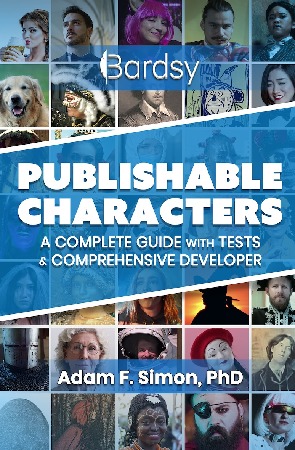
Unlike real people, however, fictional characters require deliberate, careful construction. Why? Because they don't occur naturally! A lot of work goes into creating an identity that is realistic, relatable, and someone your readers will root for. So, this approach composes and blends a character into an integrated, believable being, someone that your readers will empathize with and remember long after they've read the last page. Our freshly published guide Publishable Characters: A Complete Guide With Tests & Comprehensive Developer presents this thinking in full.
Composition vs. Blending
This week's post presents the second half of this recipe: blending. The idea is to use interactions to turn the three Character Equation ingredients: Parts of You, Cultural Universals and Specific Referents into a relatable person. Like any recipe, piling a bunch of ingredients on the counter doesn't make a meal. In a few words, your character needs to be cooked. Thus, the Character Equation provides a strong foundation while blending makes them feel whole and cohesive.
Blending ensures your character meets the two key criteria: authenticity and investability. Under authenticity, you can hold the character in your mind as a whole being. Under investability, readers can understand and empathize with the character. The aim is not mechanical perfection, but a cohesive, lifelike personhood.
The immediate task is to blend the three ingredients until they're inseparable, like a smoothie, and not a salad or a strew. (Choose the simile that tastes best.) The character should feel whole and uninterrupted after blending. Avoid acting like Dr. Frankenstein and stitching together random pieces—you don't want any noticeable or mismatched parts! The monster's seams, bolts, and poor fit signal failure. A character so haphazardly thrown together like this is neither authentic nor investible. The idea is that a natural individual is a seamless blend of nearly infinite influences, and a good character must attain this seamlessness to be knowable, relatable, and interactable—capacities all ordinary people have. And blending is easily your remedy for a bad case of Frankenstein's monster.
With a viable set of components, mixing them takes less work than you may think. It's almost an automatic process, a fringe benefit that comes with interacting with your character. And this is what we recommend. Interaction is the trick! The more you treat them as a real person, the sooner they will feel like one. So draw them, talk to them, joke with them. You're not looking to identify any one trait or aspect, but rather engage with their entirety like a real person. The process is like a performance, a rehearsal for life, in which you play two roles: you and your character.
Four blending tricks let you explore your character. Each seeks to encourage interaction and stabilize your simulacrum.

Four Blending Tricks
Here are four blending tricks to explore and learn about your character. Each activity seeks to encourage interaction and stabilize your simulacrum.
One: Find a picture. Once you have vaguely visualized your creature, firm up that mental image with an actual image. You're ahead if you can paint or draw. No matter your skill set, sketch your character as best you can, knowing you can update their look later. You can even adapt an existing image. This portrait helps fix them in your mind and provides an icon on which to center your interactions.
Two: Make a recipe. Chart your character's components. Create a table with three roles and one column for every major character. The three rows should be taken from the character equation; author, stereotypes or archetypes, and referents. As you work through your story and come to know your beings, they'll change. Don't worry about the stability during drafting. Growth in characters only mirrors real humans! But be sure to fix the character once the story has stabilized during revision.
Three: Play icebreakers. You can and should play icebreakers with your characters. Try Two Truths and a Lie and have your character dream up two true statements and one false statement. Try Would You Rather, and have your character answer thought-provoking questions, like "would you rather be smarter or stronger?" The point of these icebreakers is to get your character talking. Any dialogue with your character will help fill areas their simulacrum is missing.
Four: Borrow professional techniques. Authoring eventually involves roleplay. Draw from roleplay and acting methods to put yourself in their headspace. Aim not to act like them, but to impersonate them. It goes without saying that executing this advice takes subtlety. You can't give your character a hat and be done, though amazingly, a cap could be very useful to you as an author— a talisman that gives you the ability to become your character. Sometimes a prop or a gesture, like a posture or a catchphrase, can lock a persona in place. You can use the same trick as you write.
A Word of Caution
As you practice these blending techniques, watch out for inconsistency. If the parts of your character don't fit together naturally, readers will feel it immediately. Forced traits, sudden shifts in motive, or details that don't align with their established nature can make your character feel poorly stitched together. Blending only works when every piece belongs to the same whole.
You may also notice that your character comes together without a part you wanted, and that's okay! Don't fight it. It means you've subconsciously ejected it from the developing simulacrum. If you really wanted an aspect included, especially if your plot hinges on it, we'd advise starting over from scratch and reevaluating everything in the original recipe list. Tacking on a disconnected trait to further the plot will only make your character feel incohesive at best, and like a cheap caricature at worst.
Blend like a Bard!
In all, publishable characters are finely blended combinations of the same parts every being has. A fictional being's components fall into three categories: the author, the universal, and the distinct. Your job is to make sure these puzzle pieces fit perfectly together, solidifying your being and bringing them to life through thoughtful integration and imaginative interaction.
Remember to use our Comprehensive Character Developer, to construct your being online for an extra boost. It produces a downloadable character sheet pdf. And stay tuned for the next step in this two part process: blending.