😃 Subscribe for Post Emails:
Oct 6:
MCS & Story Development,
Writing Process & Planning,
Chapters & Openings
Pantsers Flail, Plotters Prevail: One Column with Three Keys to Unlock Your Plot
Sep 22:
MCS & Story Development,
Writing Process & Planning
Sketch Your Next Novel Our Way; Get Started in One Day
Sep 8:
MCS & Story Development,
Writing Process & Planning,
Feedback & Retelling
Good Spiraling: Conscientiously Add Ideation and Feedback to Write Better Novels
Aug 25:
MCS & Story Development,
Writing Process & Planning
Once Upon a Time? What Fairy Tales Teach Novelists About Memory and Writing
Aug 11:
Writing Process & Planning,
Chapters & Openings
Part 3: Mastering the 100,000-Word Novel Budget: Multivalue Paragraphs
Jul 28:
Writing Process & Planning,
Chapters & Openings
Part 2: Mastering the 100,000-Word Novel Budget: Satisfying Chapters
Jul 14:
MCS & Story Development,
Writing Process & Planning,
Chapters & Openings
Part 1: How to Master the 100,000-Word Novel Budget and Make Every Word Count
Jun 30:
Feedback & Retelling,
Writer Personas,
Mindset & Motivation
Isolation's Impact: Evidence that Authors Misjudge Their Work
Jun 16:
MCS & Story Development,
Chapters & Openings,
Feedback & Retelling
Unlocking Story Sense: The Differentiator Between Good and Great Authors
Jun 2:
Contests & Anthologies,
Publishing & Career
Creation vs. Generation: Drawing a Non-technical Red Line Between Human Authorship and AI
May 19:
Marketing & Promotion,
Publishing & Career
Author Bio: From Bore to Brand with an Irresistible Tidbit in 6 Steps
May 5:
Marketing & Promotion,
Publishing & Career
Five Steps to a better Novel Cover: The A.T.E. Roadmap
Apr 21:
Marketing & Promotion,
Publishing & Career
Writers as Solepreneurs: Why Finishing your Novel Opens the Best Door to a Rewarding Business
Apr 14:
Marketing & Promotion,
Publishing & Career
How Authors Can Succeed During Economic Downturns
Apr 8:
MCS & Story Development,
Writing Process & Planning,
Publishing & Career
Have Sales Chase You: Select Writing Projects with Passion and Potential
Mar 25:
Writing Process & Planning,
Chapters & Openings,
Feedback & Retelling
The Art of Orientation: Anchoring Your Reader at Every Chapter Break
Mar 11:
Feedback & Retelling,
Writer Personas,
Mindset & Motivation
How to Cultivate "Healthy Arrogance": Part 2: The Confidence You Need to Break Through as a Novelist
Feb 25:
Feedback & Retelling,
Writer Personas,
Mindset & Motivation
How to Cultivate "Healthy Arrogance": Part 1: What Not to Do
Feb 11:
MCS & Story Development,
Writing Process & Planning,
Feedback & Retelling
Stop Writing in a Straight Line: The Power of Nonlinear Novel Development
Jan 29:
Writing Process & Planning,
Feedback & Retelling
The Waiter Problem: Why Authors Need True Product Testing
Jan 15:
MCS & Story Development,
Writing Process & Planning,
Publishing & Career
Separability Secrets: Why Subpar Prose Sells & 3 Ways that Helps Your Novels
Dec 10:
MCS & Story Development,
Characters
Create Authentic, Investable Characters: A Free Comprehensive Online Developer
Dec 3:
MCS & Story Development,
Writing Process & Planning
How to Crystallize Your Novel’s Narrative: The 4 Stages of the Minimum Complete Story
Nov 12:
MCS & Story Development,
Writing Process & Planning,
Marketing & Promotion
The 9-Sentence Novel: How to Build a Minimum Complete Story (MCS)
Nov 5:
MCS & Story Development,
Writing Process & Planning,
Feedback & Retelling
Our Minimum Complete Story (MCS): Better Novels in 90 Seconds
Oct 29:
MCS & Story Development,
Characters
Example Character: Meet Pat the Firefighter
Oct 22:
MCS & Story Development,
Characters
Character Recipe Step 2: Blend Your Equation Ingredients to Relatable Beings
Oct 16:
MCS & Story Development,
Characters
Character Equation Three: Steal Distinctiveness from Referents You Know
Oct 9:
Feedback & Retelling,
Marketing & Promotion,
Publishing & Career
Turn Readers into Superfans: Build Two-Way Connections
Oct 1:
MCS & Story Development,
Characters
Character Equation Two: Take Advantage of Readers' Cultural Knowledge
Sep 23:
MCS & Story Development,
Characters
Character Equation One: Steal Parts of Yourself For A Publishable Character
Sep 17:
Feedback & Retelling,
Publishing & Career
The Publishability Index™: A Checklist for Your Story
Sep 11:
Chapters & Openings,
Feedback & Retelling,
Contests & Anthologies
Four Musts for Compelling First Chapters
Sep 4:
Writer Personas,
Mindset & Motivation
What's Your Writer Persona? Message Morgan
Aug 28:
Writer Personas,
Mindset & Motivation,
Publishing & Career
What's Your Writer Persona? Grandiose Gary
Aug 21:
Writer Personas,
Mindset & Motivation,
Publishing & Career
What's Your Writer Persona? Publication Pat
Aug 7:
Writer Personas,
Mindset & Motivation
What's Your Writer Persona? Motivation Max
Jul 30:
Writer Personas,
Mindset & Motivation
What's Your Writer Persona? Learning Logan
Jul 9:
MCS & Story Development,
Writing Process & Planning
Bardsy's MCS: A Small Story That Makes a Big Difference
Jun 25:
Chapters & Openings,
Feedback & Retelling
How to Hook Your Readers (and Keep Them) via Commonality
Jun 11:
Mindset & Motivation,
Publishing & Career
Stories, Sweat, and Tears: 6 Tips for Writers Dealing with Rejection
Jun 4:
Feedback & Retelling,
Marketing & Promotion
Effectively Using Beta Readers in 2025
May 21:
Writing Process & Planning,
Mindset & Motivation
Have Something to Show for Your Summer
May 15:
Writing Process & Planning,
Feedback & Retelling
A Guide to Bardsy's Directed Writing Groups
Apr 24:
Writing Process & Planning,
Feedback & Retelling,
Mindset & Motivation
What Can a Writing Coach Do for You?
Feb 23:
Mindset & Motivation,
Contests & Anthologies,
Publishing & Career
Thanks, but No Thanks: When Your Writing Gets Rejected
Feb 16:
Writing Process & Planning,
Feedback & Retelling,
Contests & Anthologies
Winning Revisions: Making Writing Feedback Work for You
Feb 5:
Writing Process & Planning,
Feedback & Retelling
Collecting Writing Feedback You Can Actually Use
Jan 22:
Chapters & Openings,
Feedback & Retelling,
Contests & Anthologies
Is My First Chapter a Winner?
Jan 15:
Marketing & Promotion,
Publishing & Career
Social Media for Authors: A Marketing Mindset
Dec 30:
Marketing & Promotion,
Publishing & Career
But I Don't Want to be an Influencer . . . Social Media for Authors
Dec 18:
Writer Personas,
Mindset & Motivation,
Publishing & Career
What's Your Writer Persona? Hobbyist Hayden + Career Cary
Dec 10:
Feedback & Retelling,
Writer Personas,
Mindset & Motivation
What's Your Writer Persona? Social Sam
Jun 12:
Writing Process & Planning,
Writer Personas,
Mindset & Motivation
Planning Your Success: We're Here to Help!
Jun 5:
Feedback & Retelling,
Contests & Anthologies,
Publishing & Career
Fear Not ChatGPT: Only Humans Can Judge Writing Contests (And Stories)
Apr 23:
Feedback & Retelling,
Contests & Anthologies,
Publishing & Career
Bardsy's 2024 Anthology Contest
Apr 10:
MCS & Story Development,
Writing Process & Planning,
Feedback & Retelling
How to Prototype Your Novel and Ensure Coherence via Short Stories
Mar 19:
MCS & Story Development,
Writing Process & Planning
The Art of Memoir: Exploring the Intersection of Truth and Storytelling
Jan 17:
Mindset & Motivation,
Publishing & Career
Decisions, Decisions: Choosing a Writing Conference & Maximizing Your Time
Jan 3:
Mindset & Motivation,
Publishing & Career
Writing Conferences: A Writer’s Paradise or a Wasted Weekend?
Sep 6:
Chapters & Openings,
Feedback & Retelling,
Contests & Anthologies
What Makes a First Chapter Anthology Contest Finalist??
Jul 19:
Contests & Anthologies,
Marketing & Promotion,
Publishing & Career
Become a Published Author: What Goes Into Self-Publishing on Amazon
Jul 5:
Contests & Anthologies,
Publishing & Career
What Anthology Publication Can Do for You
Jun 28:
Feedback & Retelling,
Contests & Anthologies
How to Win Writing Contests by Passing These 3 Tests
May 10:
Contests & Anthologies,
Publishing & Career
Your Guide to Entering—and Winning—Writing Contests
May 3:
Writing Process & Planning,
Feedback & Retelling
How Great Writing Workshops Work
Mar 1:
Feedback & Retelling,
Contests & Anthologies
The Best Feedback You Will Ever Receive
Feb 15:
Writer Personas,
Mindset & Motivation
Writing Personas: Ready Riley!
Feb 6:
Marketing & Promotion,
Publishing & Career
7 Tips for Writing an Author Bio That Gets You Noticed
Jan 31:
Marketing & Promotion,
Publishing & Career
Yes, You Need an Author Website—Even If You’re Unpublished
Jun 22:
Mindset & Motivation,
Contests & Anthologies,
Publishing & Career
Small Steps to Big Success with Bardsy Anthologies
Jun 15:
Writing Process & Planning,
Mindset & Motivation
You’ll Love Writing with Will.Power
Jun 8:
Writing Process & Planning,
Feedback & Retelling,
Contests & Anthologies
Submit Early for Success
May 10:
Writing Process & Planning,
Mindset & Motivation
Determine the Next Step in Your Writing
May 4:
Writing Process & Planning,
Mindset & Motivation
Break Through Your Blocks with Will.Power
Mar 24:
Contests & Anthologies,
Publishing & Career
Avoid Instant Disqualification
Dec 14:
Feedback & Retelling,
Contests & Anthologies
Give and Ye Shall Receive
Nov 8:
MCS & Story Development,
Writing Process & Planning,
Contests & Anthologies
Turn Your Short Story Into a Novel
Takeaway
Every fairy tale relies on a small set of built-in cues — "once upon a time," "then one day," "until finally," "happily ever after" — that mark the same structural beats every story needs in order to lodge itself in a reader's memory. These cues aren't decorative; they're evidence of a universal "story schema" the human mind uses to store and retrieve stories, and understanding that schema gives authors a direct, practical tool. Chief among these cues is "once upon a time" itself, which functions as an automatic prime that shifts both teller and listener into story mode. Applied to your own process, this insight becomes concrete: for example, your Minimum Complete Story (MCS) — the roughly ninety-second spoken version of your novel — should open the same way to put you and your audience into story mode, which leads to quicker and more thorough story development.
The better your story fits the reader's mental schema, the more likely it is to lodge in memory — and the happier the reader is for having read it.
This post offers a bit of fun as we're talking about fairy tale cues. Naturally, this topic sounds suited for children, but it holds an important lesson for novelists, one you can apply directly to your own work.
There are two main points. First, these cues further our understanding of how readers actually read, especially how a story finds its way into memory and stays there. The operative idea is that human minds have a story "schema" — a mental model shaped to hold stories, which lets us comprehend and retain what we hear and read. Second, we apply that insight to your writing process, specifically your Minimum Complete Story (MCS) — the roughly ninety-second spoken version of your novel. In brief, hearing the magic words "once upon a time" shifts our brains into story mode with all the benefits that process entails.
Define Fairy Tale
So what, exactly, is a fairy tale? At its core, it's a story, reduced to its essence: the five stock elements of character, world, conflict, theme, and plot, arranged simply. This reduction is precisely why fairy tales appeal to children — they're built to effectively teach growing minds the lessons tellers want to convey. This same reduction also allows fairy tales to reveal something essential about stories more generally.
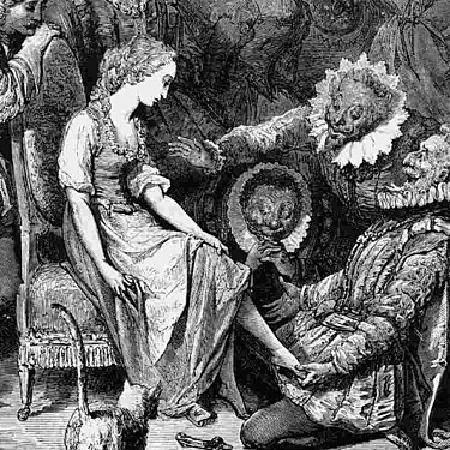
Fairy tales' remarkable durability reinforces this insight. There's a stable inventory of them: roughly 2,500 by one count, once every plot variation is tallied. More notably, the same stories resurface across cultures independently. The written version of Cinderella, for example, appeared in China around 860 AD, under the name Ye Xian. The same story surfaced again in France in the 1600s and, more recently, became a Disney film. We all know it: abandoned girl, evil stepmother, magic carriage, prince, search, slipper, and happy ending.
It's unlikely that France copied China. Rather, these basic stories seem to emerge from human experience. More importantly, fairy tales take this shape because every element is necessary for a story to function.
Sources
Two separate bodies of research inform this argument. One is what we can call anthropological. Here, Vladimir Propp first cataloged fairy tale structure in Morphology of the Folktale (1928), later extended by Antti Aarne and Stith Thompson's The Types of the Folktale. Essayist Anthony Madrid's observation, discussed shortly, on the ubiquity of "once upon a time" belongs here too. The other body of research is more cognitive. In this line, Brian Boyd's On the Origin of Stories remains one of the only sustained examinations of memory and stories.
What follows, however, is also conjectural, for good reason. Studying stories scientifically is notoriously difficult. Novels rank among the most complex messages humans produce, and unlike votes or other behaviors we can observe by the thousands, no two novels resemble each other closely enough to compare at scale. Add memory to the equation and the problem compounds. The most advanced tool, functional MRI, is typically limited to a single sentence and a handful of subjects — hardly enough to shed light on novels. So what follows adds what we know about memory to what we know about stories, combining them to provide useful insights for authors.
Fairy Tale Cues
Cues identify and segment content; here they map ideas onto a story's elements. Storytellers insert them at key points to help audiences understand and follow along. These are the more obvious Fairy Tale Cues (FTCs) and their relationship to plot:
- Setup — "Once upon a time…"
- Inciting Incident — "Then one day…"
- Rising Action — "First… second… third…"
- Climax — "Until finally…"
- Resolution — "...happily ever after."
Crucially, these aren't mere decorative flourishes. They offer younger audiences real help. For our purposes, the main point is that they are universal. Every culture on earth tells stories, and every culture on earth embeds cues like these inside them. That pattern has probably persisted for thousands of years, surviving the arrival of both print and digital media — and that kind of universality teaches us something about how the human brain is wired for storytelling.
3. Observations
More precisely, this pattern leads to three observations:
- Universal cues — these cues are universal, which says something significant about how the human brain and memory work.
- "Once upon a time" — the single most important and universal cue, which merits its own examination.
- Application — all of this should inform how you approach your own writing process.
1. Universal Story
These cues imply something authors should fix in their minds; specifically that there is a universal story structure, some template every story shares. The most immediate association is Freytag's Pyramid; remember his five well-known elements: inciting incident, rising action, peak, falling action, resolution. Every story operates this way, and the cues themselves only function because they depend on the deep structure embedded in our brains that we use for stories.
The technical term for this structure is a schema — a memory "model" that holds concepts stored for future use. Schemas stem from patterns, in this case regularities that appear in stories. The story schema takes its shape from what every well-formed story contains and how these elements fit together. It's important to know this term because a schema lets us describe exactly what a story needs to do to lodge in memory: fit the schema.
Think of these schemas as story-shaped boxes. Our brains obviously don't have literal boxes; that's a metaphor. Respecting the aforementioned caveats, our observation suggests that people possess a memory model devoted specifically to storing stories, shaped to fit what we might call the "ideal" story. This leads to today's main point: the better your story fits that "ideal," the easier it is to comprehend, the more likely it is to lodge in memory, and the happier its reader will be.
(Great) Stories > Memory
Why does fitting the template matter so much? Imagine that each schema has a set of slots, and each slot holds a particular element, like character. In addition, the slots have to fit together like puzzle pieces. Great stories properly fill the slots and are easier to follow and remember. The following thoughts about the potential relationship between great storytelling and memory summarizes a great deal of scientific research:
- Templates support comprehension. A main character is required, for instance; a story without one leaves readers searching for whoever should fill that slot, instead of following the story.
- Organization supports coherence. Readers understand well-organized stories more easily because these stories fit the schema.
- Emotions attach importance. Our feelings function as an attention-allocation mechanism; provoking strong emotional reactions increases the odds that a story will be lodged in memory.
- Schematization facilitates retrieval. A story that fits the schema is easier to recall, both its major elements as well as specific details.
- Schematization increases fidelity. When stories stick to the pattern, they prove easier to pass along — think of the telephone game, where a message drifts further from the original with every retelling; a story that clings to its pattern resists that drift.
More broadly, authors should realize that deviating from the ideal story pattern can be interesting up to a point, but every deviation adds cognitive load, which makes a satisfying reader experience less likely.
2. Once upon a time
This "once upon a time" phrase merits special attention, because it may be the most important cue. As Anthony Madrid puts it, some version of it appears in every folktale ever recorded, from China to Peru; he adds "as though some law of physics were involved." Notably, his allusion to physical law parallels our description of the story schema and its implications.
Why would a phrase achieve that remarkable ubiquity? A few reasons spring to mind. "Once upon a time," first, functions as a prime. Hearing those words automatically shifts a listener's brain into story mode. It does the same for the teller, who tends to adopt the cadences of good storytelling magically once the phrase is spoken. There's a second reason: it prompts the teller to encapsulate the setup, the most important part of any story. Remember, get your setup right, and you're well positioned. Get it wrong, and nothing that follows fully compensates.
3. Application
How can these observations help your writing process? The most direct application is your Minimum Complete Story, or MCS — the spoken, ninety-second version of your novel. Recall, your MCS and your novel are both stories, so both should fit the same story-shaped box; the only meaningful difference is format. One runs roughly a hundred thousand words on the page; the other is told aloud in about ninety seconds.
So, take advantage of this phrase's power by starting your MCS with "once upon a time," until the MCS skill becomes second nature. It performs the same function here as it does anywhere else: activating story mode, for you and for whoever is listening. Within your MCS, then, the primary task is to fill each slot — character, world, conflict, theme, plot — the way you'd stock the drawers of a chest.
From there, resist the temptation to memorize your MCS and recite it word for word. Instead, recall the elements from the schema and tell the story around them. With practice, you can do this automatically because you are in storytelling mode. Using this approach allows the story to "live" and develop. We don't expect your MCS to stabilize until you're well into the novel. The exploration leads to better work. For example, when inspiration — in the form of a great idea — inevitably strikes, don't discard what you have. Instead, aim to tell your living MCS in a way that integrates the inspiration with existing content. A better version of your story will rapidly emerge to serve as the basis for your efforts going forward.
Fit the schema, lead with your setup, and let coherence do the rest. Every fairy tale we've discussed here ends with some version of "happily ever after." Structure your story the same way, and there's a decent chance yours will too.
We look forward to your thoughts or questions at joinus@bardsy.com.